The 5 most common imbalance zones in CrossFit®
For any athlete, it's never quite the same zones causing trouble. But in our physios' experience, five come back almost every time: shoulder, wrist, core, hip, ankle. They're pivot zones. When they don't keep up, it can ripple through the rest of your structure.
Why these zones accumulate imbalances
CrossFit® demands certain prerequisites to be practised smoothly: strength, range of motion, motor control. When those prerequisites are missing, the body compensates and adapts poorly, and the intensity that defines the sport raises the odds those imbalances surface.
In practice, these deficits show up as reduced range of motion or hitches in execution, for example in the bottom of a squat or in overhead stability. Left unaddressed, the risk is a performance ceiling, a higher chance of injury, and an inability to express your full capacity.
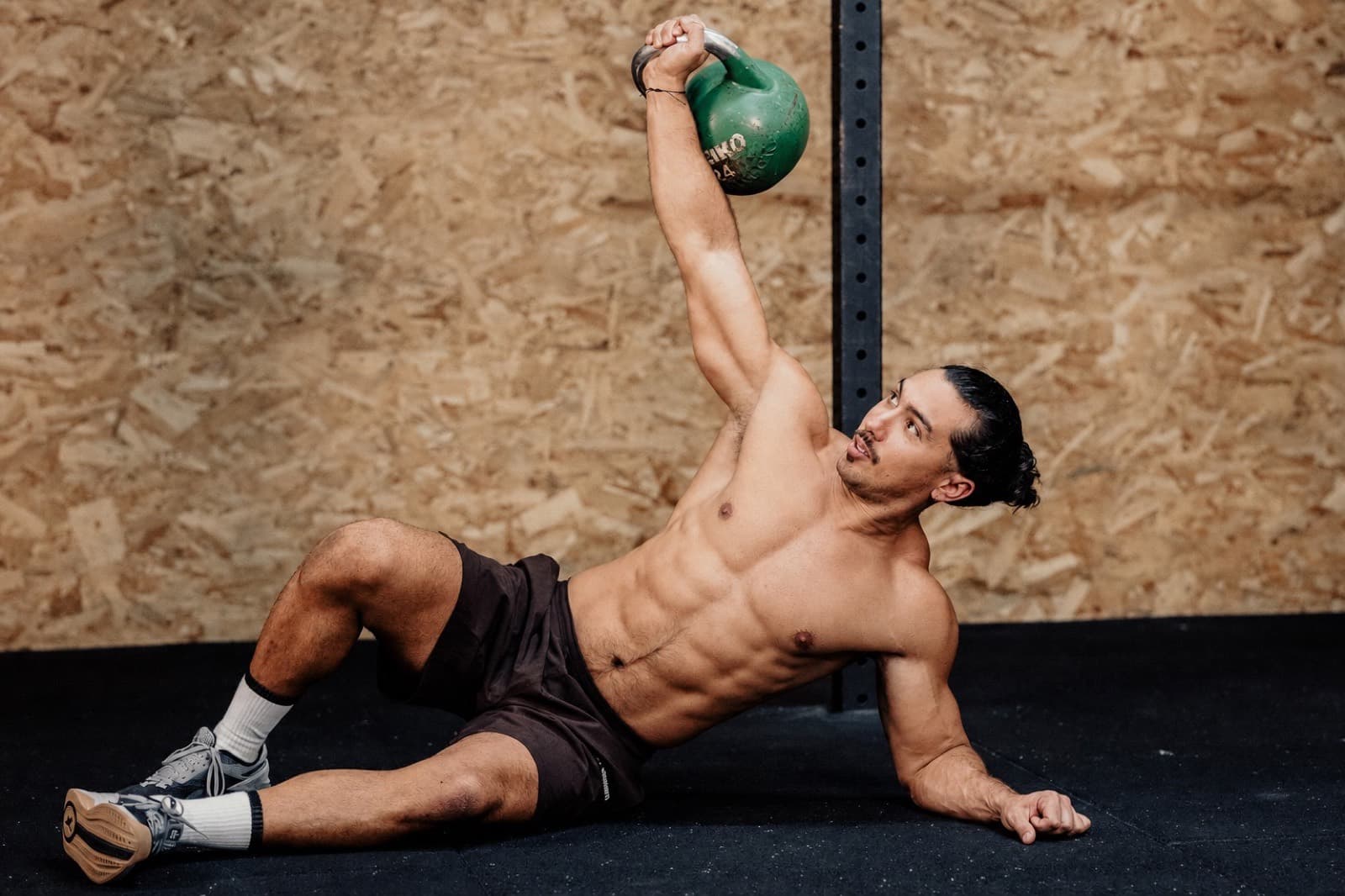

Shoulder
Every discipline CrossFit® brings together puts the shoulder under load: gymnastics, on the floor and hanging, and weightlifting. It needs stability for anything support-based, range of motion for overhead movements, and good external rotation for the clean and front squat. Its strength matters just as much, in both pushing and pulling.
In practice, this shows up as an unstable bar overhead on a snatch, shoulders rounding forward at rest, or arms that struggle to lock out overhead, under load or on a handstand.

Wrist
It's an underrated zone, smaller and worked less often than the others. Yet it's loaded in dorsiflexion on the front squat, the clean and support-based gymnastics, and it takes significant pressure, on top of playing a key role in grip.
When range of motion is lacking, pressure transfers poorly and alignment is lost during the movement. In practice, this shows up as discomfort in gymnastics support positions, or a compromised front squat position.

Core
The core is engaged constantly, whether in gymnastics on a muscle-up, or in weightlifting on a snatch. A solid trunk is the key: it's an absolutely decisive central zone.
When it doesn't keep up, compensations mostly settle in the hips or the back. Without a strong core, force transfer is compromised, which makes stabilising and handling heavy loads or complex movements harder.

Hip
The hip is heavily used, especially in every squat pattern: hip flexion and internal rotation are needed for a deep squat and proper technique. It's also in high demand on the clean and wall ball.
When range of motion is lacking in the bottom of a squat, the body compensates with the trunk or the ankles. This translates into a loss of performance, notably on weightlifting movements or on jumping speed.

Ankle
The ankle matters on those same squat patterns, and on anything involving jumping: double-unders, box jumps. When range of motion is lacking in a lunge or squat position, the heels lift, or the body compensates with the knees.
In practice, this translates into a loss of force transfer and explosiveness in jumps, and added strain on the knees and hips.
Where to start
There's no universal recipe: priority goes to the zone with the biggest deficit. But in a sport as full-body as CrossFit®, where movements load the entire body, a balanced profile is preferable to avoid a real bottleneck. A chain is never stronger than its weakest link.
Key takeaway
These five zones, shoulder, wrist, core, hip, ankle, are pivot zones. When they carry deficits, they hold back the full expression of your capacity, whatever the rest of your preparation looks like.
Want to know exactly which zones concern you?
Take the Deep test